
LaDena Bolton (D)

Commissioner Super District 7
“My office hosted our signature Bark and Chill event in partnership with CEO Cochran-Johnson, Commissioner Long-Spears and Lifeline. We offered free spay and neuter services, directly reducing future intake by preventing unplanned litters and promoted our most vulnerable pets for adoption. These programs complemented the county’s broader strategy of encouraging adoption and fostering to shorten animals’ length of stay.“
- Commissioner Bolton on her previously demonstrated effort in support of animal welfare.
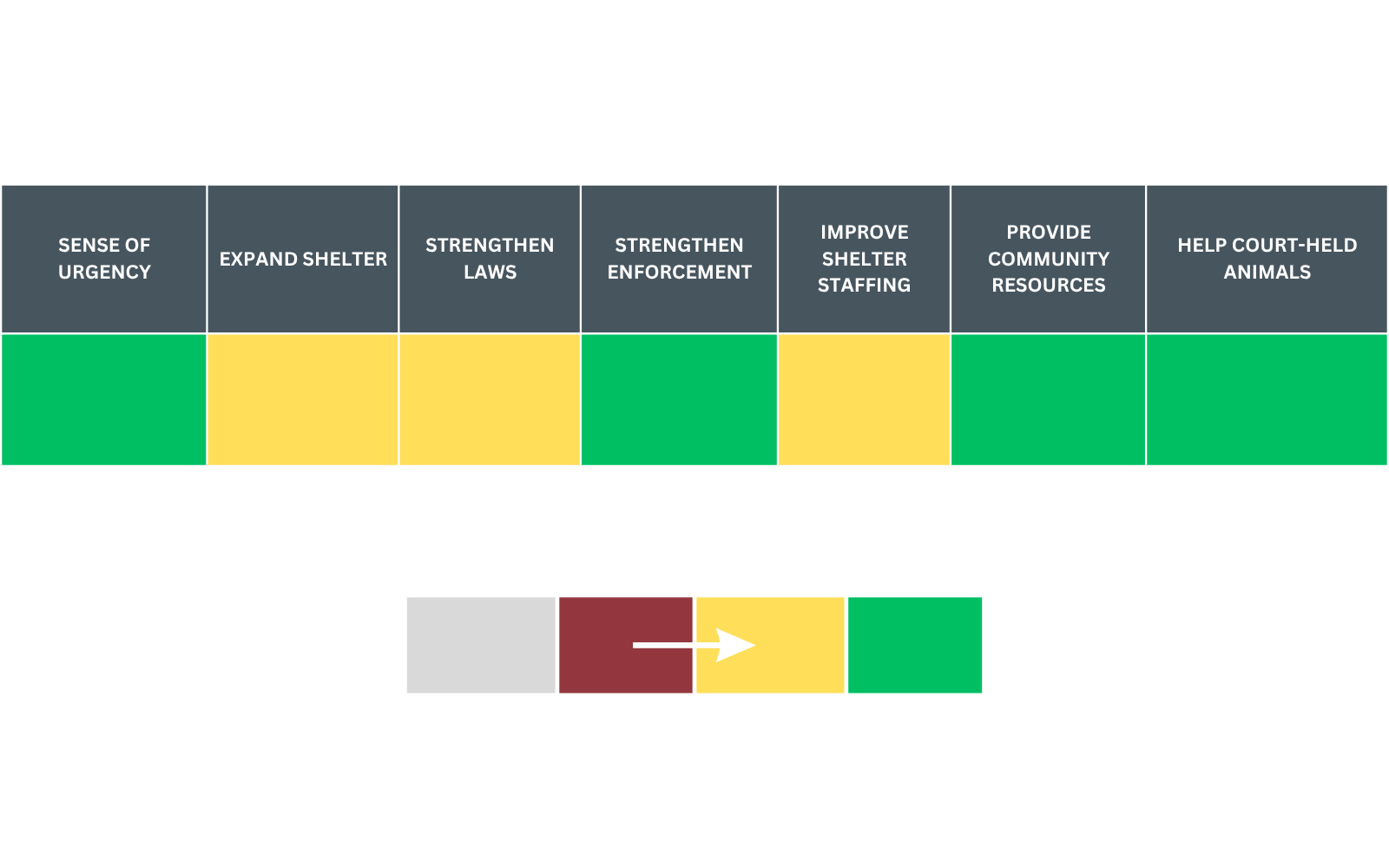
Summary By Position:
No Response —> Weakest —> Strongest
2026 Election Survey Responses
Responses are detailed below by subject matter and position. Candidate response summaries are a function of their expressed level of support (Commitment to Specific Activities) combined with timing priority (Commitment to Timeline).
-
How committed are you to expanding the current shelter to accommodate current and future needs during your term?
A: High CommitmentHire a licensed architect/architectural firm, with a successful track record of building right-sized, life-saving, no-kill animal shelters based on capacity needs.
A: Very High CommitmentCollect input, and assure its use in expansion plans, from Animal Services staff and volunteers, the DeKalb Animal Advisory Board, as well as the wider community.
A: Very High CommitmentUse the designated $7.5 million SPLOST II funds, and secure whatever additional amount is needed to complete the expansion.
A: Very High CommitmentWhat is your timeline for completing the expanded shelter for DeKalb County?
A: Within My 4-year TermPlease use this area to explain any of your answers to shelter expansion questions.
If you have previously worked on this issue, please describe how your efforts have addressed shelter overcrowding in DeKalb County.
Please also add any thoughts you have for addressing shelter overcrowding not mentioned above - we want to hear your ideas.
If you have nothing to add, please put "N/a."
A: “Since 2025, I have served as the Chair of Employee Relations and Public Safety (ERPS), were we have taken a multi‑layered approach to reducing shelter overcrowding, combining facility expansion, new legislation, community programs, and legal reforms to reduce the number of animals entering—and remaining in—the system. In 2025, we expanded its shelter capacity by adding climate‑controlled kennel buildings capable of housing up to 120 additional dogs, a critical step at a time when the shelter was caring for roughly 500 dogs despite an ideal capacity of 221.“
-
How committed are you to strengthening local ordinances to reduce and prevent homeless, neglected, and abused animals?
A: Very High CommitmentHow committed are you to ensuring the passage and enforcement of a new breeding and sales regulation?
A: Very High CommitmentSpay and Neuter How committed are you to mandating and enforcing a new spay or neuter requirement with pet registration?
A: High CommitmentHow committed are you to establishing an Animal Advocate for the County’s impounded animals?
A: Very High CommitmentHow committed are you to establishing an Animal Disposition Hearing process to reduce the number animals impounded for court cases and reduce their shelter stay?
A: High CommitmentWhat is your timeline for passing a new breeding and sales regulation as well as a spay and neuter requirement with pet registrations, once elected?
A: Within 2 YearsPlease use this area to explain any of your answers to shelter expansion questions.
If you have previously worked on this issue, please describe how your efforts have addressed shelter overcrowding in DeKalb County.
Please also add any thoughts you have for addressing shelter overcrowding not mentioned above - we want to hear your ideas.
If you have nothing to add, please put "N/a."
A:“Under my leadership as Chair of ERPS, the board approved new breeding‑control measures, including a free litter registry requiring owners to report births within 21 days, limits of one litter per year, and restrictions on breeding animals under one year old. These rules were designed to curb illegal breeding, reduce overpopulation, and lower euthanasia rates. Additional ordinance work clarified existing animal‑control laws and strengthened enforcement tools to prevent exploitation of legal gray areas contributing to overcrowding. Community‑based population‑control efforts have also been central. My office hosted our signature Bark and Chill event in partnership with CEO Cochran-Johnson, Commissioner Long-Spears and Lifeline. We offered free spay and neuter services, directly reducing future intake by preventing unplanned litters and promoted our most vulnerable pets for adoption. These programs complemented the county’s broader strategy of encouraging adoption and fostering to shorten animals’ length of stay. OUR PROUDEST MOMENT IS WHEN ONE OF OUR FURY FRIENDS THAT WAS ON THE LIST FOR EUTHANASIA WAS ADOPTED RIGHT ON THE SPOT!!!”
-
What is your level of commitment to budgeting and filling enforcement positions commensurate with NACA standards?
A: Very High CommitmentWhat is your level of commitment to employing two POST certified officers to investigate and make charges related to neglect and cruelty, as well as provide training for all officers on record keeping and building strong cases?
A: Very High CommitmentWhat is your level of commitment to increasing training of field officers to improve skills related to bringing owners into compliance with local animal ordinances and state law?
A: Very High CommitmentWhat is your level of commitment to developing, implementing, and training all staff on a life-saving, public health and safety-based SOP Manual and System?
A: Very High CommitmentWhat is your timeline for funding enforcement positions. (i.e., increasing the staff numbers) commensurate with NACA standards once elected, and hiring two POST-certified staff?
A: In the first yearWhat is your timeline for ensuring all enforcement staff have received adequate training on bringing owners into compliance with local animal ordinances and state law?
A: In the first yearPlease use this area to explain any of your answers to shelter expansion questions.
If you have previously worked on this issue, please describe how your efforts have addressed shelter overcrowding in DeKalb County.
Please also add any thoughts you have for addressing shelter overcrowding not mentioned above - we want to hear your ideas.
If you have nothing to add, please put "N/a."
A: “Under my leadership as Chair of the ERPS Committee, the board reviewed the Mauldin & Jenkins evaluation of the shelter and is working with the administration and The Momentum Firm to help implement improvements identified in that review. Since then, we have been in active communication with the Police Department, Legal department and the Solicitor‑General’s Office about adding investigators and other support staff to address concerns around cruelty investigations, court‑held animals, and case backlogs.”
-
What is your level of commitment to conducting a compensation study on shelter workers in DeKalb County and publishing findings on appropriate pay?
A: Very High CommitmentWhat is your level of commitment to budgeting and filling shelter positions commensurate with NACA standards?
A: Very High CommitmentWhat is your timeline for funding shelter staff positions commensurate with NACA standards and with pay informed by the compensation study's results, once elected?
A: Within 2 yearsPlease use this area to explain any of your answers to shelter expansion questions.
If you have previously worked on this issue, please describe how your efforts have addressed shelter overcrowding in DeKalb County.
Please also add any thoughts you have for addressing shelter overcrowding not mentioned above - we want to hear your ideas.
If you have nothing to add, please put "N/a."
A: “During my tenure as Chair of the Employee Relations and Public Safety (ERPS) committee, we have supported the CEOs steps to support a full pay in class study (compensation analysis) across the county including shelter workers. This includes: Authorizing a countywide compensation study that specifically includes animal‑services positions, ensuring that shelter workers’ pay is evaluated against regional and national benchmarks.”
-
For pop-up veterinary services?
A: Very High CommitmentFor spay/neuter, microchipping, vaccinations, etc.?
A: Very High CommitmentFor pet food and supply bank(s)?
A: Very High CommitmentFor fencing and outdoor pet shelters?
A: Very High CommitmentWhat is your timeline for providing financial, logistical, and communications support for ongoing programs to increase access to all resources listed above (e.g., food banks, vet care etc)?
A: In the first yearPlease use this area to explain any of your answers to shelter expansion questions.
If you have previously worked on this issue, please describe how your efforts have addressed shelter overcrowding in DeKalb County.
Please also add any thoughts you have for addressing shelter overcrowding not mentioned above - we want to hear your ideas.
If you have nothing to add, please put "N/a."
A: “Under my leadership as Chair of ERPS, we supported community pet‑care resources by approving funding for programs that deliver low‑cost veterinary services, spay/neuter access, microchipping, and vaccinations directly to residents. Over the past year, community pop‑up clinics and partner events have provided thousands of free vaccinations and microchips, along with significant numbers of spay/neuter vouchers that directly reduce unwanted litters and lower shelter intake. Pet‑food and supply banks have distributed tens of thousands of pounds of food to families facing temporary hardship, helping pets remain safely in their homes.”
-
What is your level of commitment to reduce the stay of all court-held animals, particularly dogs, during your term?
A: Very High CommitmentWhat is your level of commitment to establishing policies encouraging surrender by owner in the field and shelter?
A: High CommitmentWhat is your level of commitment to establishing a hearing process to determine disposition and release of animal(s) during court processes?
A: Very High CommitmentWhat is your level of commitment to utilizing a stray animal protocol for length of impoundment prior to release of court case animals? This would be when the owners do not contact the shelter after notice of impoundment.
A: Very High CommitmentWhat is your level of commitment to developing a partnership with prosecutors to utilize all options to release animals?
A: Very High CommitmentWhat is your level of commitment to developing a policy to use Motion to Dispose and Costs of Care in every case and in a timely manner where owners fail to appear or delay trial?
A: Very High CommitmentWhat is your timeline for establishing owner surrender policies?
A: In the first yearWhat is your timeline for establishing Motion to Dispose and Cost of Care policies?
A: In the first yearPlease use this area to explain any of your answers to shelter expansion questions.
If you have previously worked on this issue, please describe how your efforts have addressed shelter overcrowding in DeKalb County.
Please also add any thoughts you have for addressing shelter overcrowding not mentioned above - we want to hear your ideas.
If you have nothing to add, please put "N/a."
A: “Under my leadership as Chair of ERPS, we supported community pet‑care resources by approving funding for programs that deliver low‑cost veterinary services, spay/neuter access, microchipping, and vaccinations directly to residents. Over the past year, community pop‑up clinics and partner events have provided thousands of free vaccinations and microchips, along with significant numbers of spay/neuter vouchers that directly reduce unwanted litters and lower shelter intake.”